|
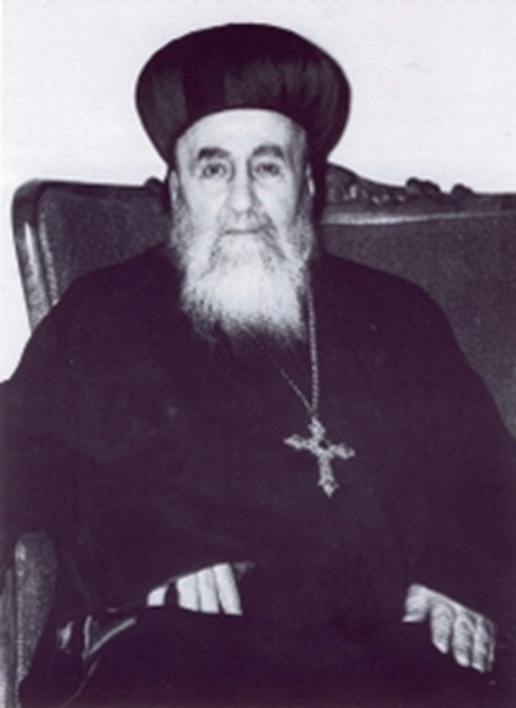
Hanna Dolabani
Who made the East- Aramean Nestorians known as "Assyrians"?
SUA/WCA and allowing terrorism
Aramean history, history, culture and language, a six partite interview
21-1-2013: Iraq: Aramean teacher and student killed in Mosul
22-2-2012: Iraq: We have left behind a "sovereign, stable and self-reliant Iraq"
19-8-2011: Iraq and Arameans: The usual ritual, blowing up their churches
7-6-2011: The uproar in the Middle-East and the future of the Aramean nation
29-4-2011:
“Liberation” of
23-11-2010: Aramean blood continue to flow in Iraq: Two Aramean brothers killed in Mosul
11-11-2010: An Aramean spiritual leader makes a dramatic appeal: Leave Iraq
1-11-2010: Bloodbath among the Arameans of Baghdad: Something like this never happened
17-5-2010: Iraq: The 19 years old Aramean girl Sandy Shabib Hadi Zahra succumbs to her injuries
10-3-2010: Exodus Arameans from Mosul: According to recent UN report more than 5000 Arameans have left Mosul
27-2-2010: Council of Churches in Iraq appeals to the government to protect the Aramean people in Mosul, Iraq
26-2-2010: The Arameans of Mosul: A new Exodus and Ethnic cleansing is going on
18-2-2010: The Arameans of Iraq again victim of killings and bloodbaths:
24-12-2009: A Christmas “message” for the Arameans of Mosul: Four Aramean Churches attacked and one Aramean killed
1-9-2009: Arameans of Iraq: The East- Aramean Chaldean bishop Louis Sako of Kirkuk sounds the alarm bell
29-8-2009: Totally unfounded or has it a grain of truth in it? Greater- Israel and the ethnic cleansing of the Arameans of Mosul and surroundings in Iraq
13-7-2009: Seven Indigenous Aramean Churches in Baghdad (Iraq) attacked by car bombs
4-5-2009: Aramean blood continues to flow in Iraq…
15-11-2008: Iraq: The bloodshed of Aramean people and bombardment of churches continues undiminished
27-10-2008: Attempt of ethnic cleansing Mosul: The Aramean Srebrinica. Who is responsible and why?
2-9-2008: Again two Arameans killed in Iraq
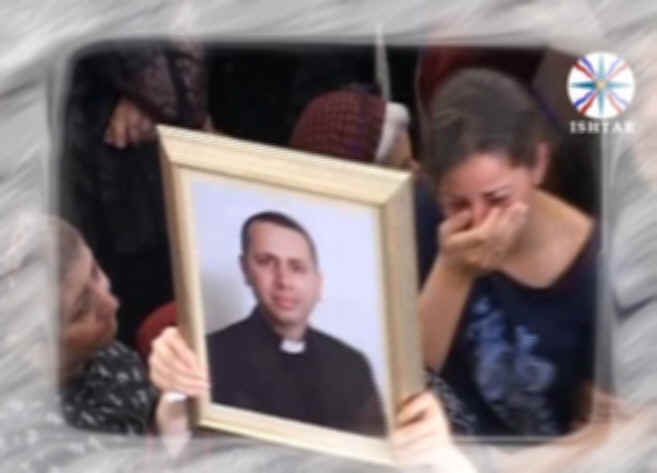
Killing of Priest Yusuf Adel Abudi
4-5-2008: Again a Aramean spiritual leader is killed in Iraq. This time: The West- Aramean Syrian orthodox priest Yusuf Adel Abudi in Bagdad
11-4-2008: Through all the misery: Miracles happens in Iraq
6-4-2008: Funeral of the West- Aramean Syrian Orthodox Priest Yusuf Adel Abudi
Killing of Mgr. Faraj Raho
1-3-2008: East- Aramean Chaldean bishop of Mosul, Mgr. Paulus Faraj Raho was abducted on 29-2-2008 in Mosul.
13-3-2008: The East- Aramean Chaldean bishop Paulus Faraj Raho killed in Mosul
14-3-2008: Friday 14-3-2008: Funeral of Mgr. Faraj Raho in St. Addai Church in Karemlesh
16-3-2008: Mgr. Paulus Faraj Raho: A Great Spiritual Leader and a Worthy Sheppard in Charge of Jesus Christ
23-2-2008: Aramean centre for art and culture has been opened in Ankawa, northern Iraq
7-1-2008: Aramean Churches and institutions in Iraq under Attack
Killing of Priest Ragied Aziz Gannie
25-5-2007: Terror against Arameans (including "Assyrians" and Chaldeans) of Iraq. Ethnic cleansing of the Indigenous people of Iraq
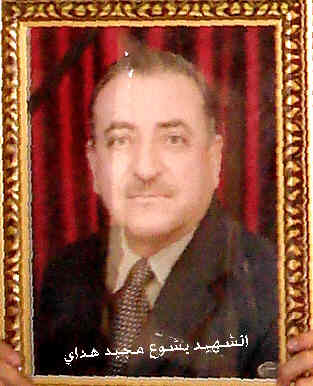
Killing of Isoh Majeed Hadaya
22-11-2006: The West- Aramean Isoh Majeed Hadaya killed by terrorists in Iraq
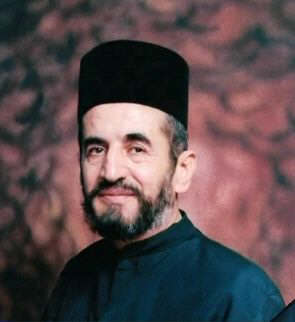
Killing of Priest Paulus Iskandar
12-10-2006: Aramean priest Iskandar beheaded in Mosul (Iraq) |
Aramean people: Aramean people (not to be confused with ‘Armenians’) speak Aramaic, the language spoken by Abraham, Moses and Jesus. They are the indigenous people of what was called in ancient times Aram- Nahrin, in our days it is called ‘Mesopotamia’. Some Arameans today identify themselves with “Assyrians”, because of the spiritual colonial hate generating activities of the Western missionaries and diplomats in the Middle-East in 16th and 19th centuries. Other Arameans became known as “Chaldeans”. However all of them are Arameans. In Turkey, the Arameans are called: Süryani. In Arabic they are called Al- Suryan. Economic and Social Council of the United Nations COMMISSION ON HUMAN RIGHTS Sub-Commission on the Promotion and Protection of Human Rights Working Group on the Indigenous Populations - 24th session Geneva, Switzerland: 31 July – 4 August 2006 The Cradle of Civilization Aram-Nahrin (Iraq) is burning and crying: How to solve the conflict? Read out loud: Wednesday 2-8-2006 Oral statement under item 4 (c): Indigenous peoples and conflict prevention and resolution.General Review of developments pertaining to the promotion and protection of the rights of indigenous peoples, including their human rights and fundamental freedom: Check against delivery: Blue + Arial Narrow + Italic = not read loud Mr. Chairman; In the framework of Item 4 (c) we would like to raise our concerns regarding the complex and bloody conflict in the lands of the forefathers; in ancient times called Aram-Nahrin in Aramaic; translated to Mesopotamia by the Greeks and known to the world in our times as Iraq. Flying parts of human bodies; mangled bodies in the streets covered with human blood, desperate and crying mothers; children crying for their parents; heartbreaking scenes; it is unbearable how the innocent people of Iraq are suffering. The cradle of civilization is burning and peace, love and brotherhood seems to be far away and unachievable. Nobody knows how to solve this conflict and the world is at a dead loss what to do. Revenge and bloodshed are the daily street scenes in Iraq. The path of the fanaticism and intolerance is reigning supreme where the words like peace, respect and brotherhood seems to be very rare. Many of these atrocities where the innocent Iraqi people are suffering from are committed by foreigners whose goal is to create anarchy and chaos preventing the establishment of democracy. There seem, however, also some groups active within Iraq who hails the present situation with cheer in order to conduct ethnic cleansing in some parts of the country to get rid of its Indigenous people. Mr. Chairman; The Indigenous Aramean people are living for thousands of years in this part of the world and are familiar for hundreds of years with this kind of tyranny, fanaticism, intolerance, bloodshed and mercilessness. There are in Iraq various Aramean denominations, such as West-Aramean Syrian Orthodox, West- Aramean Syrian Catholics and Melkites, East- Aramean Chaldeans and East- Aramean Assyrians. There are around 500.000 Arameans who are concentrated in the north and central part of the country with few thousand in southern part. Some rough numbers about various denominations: West- Aramean Syrian Orthodox: 80.000-100.000 West-Aramean Syrian Catholic: 40.000-45.000 West- Aramean Syrian Melkites????? East- Aramean Chaldeans: 200.000-300.000 East- Aramean Assyrians: 25.000-30.000 How can you, as an indigenous nation, deal with such complex conflicts? And how did the Aramean nation deal with these impossible situations since hundreds of years on local and regional level? As an indigenous nation you are finding yourselves at the mercy of people and regimes that are not familiar with ‘Human Rights’; not to speak about indigenous rights. Nevertheless, we believe that the secret behind dealing with these types of complex conflicts is: loving and respecting your neighbour like yourself! We believe that this path is the best medicine to heal wounds, dry tears, stop cry of children and mothers, solve conflicts and act as a solid foundation for democracy and Human Rights. Unfortunately; not everybody welcomes this policy with open arms; for our experience is that some people consider this policy as being backwards and will most likely resort to the path of the sword, glorifying and promoting it! In their perception of the world; the path of oppressing and subjecting others as second class citizens seems to be exalted to a holy act. And this makes conflict resolution very difficult, not to say: impossible. Our impressing is that this path which leads to peace is unknown by some people resulting in the present-day situation. Others show two faces, namely: in front of the camera they glorify the path of love, respect and brotherhood; while in reality they apply the path of the sword. In such hostile environment, our people were and are constantly fighting to survive and reconcile themselves to the horrible conditions of their persecutors in order to save their lives. They had to obey them unconditionally; they were forced to assimilation and to deny their rich cultural heritage and were forced to implement strange cultures. Another point is Mr. Chairman; that the policy of Aramean nation is not rewarded or recognised in the new Iraqi Constitution. In “appreciation” of the Aramean policy of peace and respect they are excluded from the Iraqi constitution; while the “product” created by the Western spiritual colonialism of 16th and late 19th century; which had a devastated effect on the Aramean people in the middle-east, is glorified in the new constitution. In Article 124 of the constitution we read, “This Constitution shall guarantee the administrative, political, cultural and educational rights for the various nationalities, such as Turkmen, Caldeans, Assyrians and all other components. A law shall regulate this “. Please note how explicitly the Western Spiritual Colonial and slavery products “Assyrians” (a product of the Western Anglican missionary) and ,,Chaldeans” (a product of Western French/Roman Catholic missionary) are being glorified in the constitution without a reference to their Aramean origin. In our statement under Item 4 (a); this problem has been explained in detail. In order to be able to maintain the Aramean policy of respect and brotherhood in a sea of fanaticism and intolerance; we ask for your support in the following points: * Please demonstrate your solidarity to help maintain the Aramean presence in the lands of the forefathers. * Please help to include the Aramean nation as the indigenous people of Iraq in the new Iraqi constitution.
Thank you
Gabriel Sengo (President) Arameans of Aram-Naharaim Foundation P.O. Box 178 7550 AD Hengelo(Ov.); Netherlands
Background information on Aramean people (including “Assyrians” and Chaldeans)
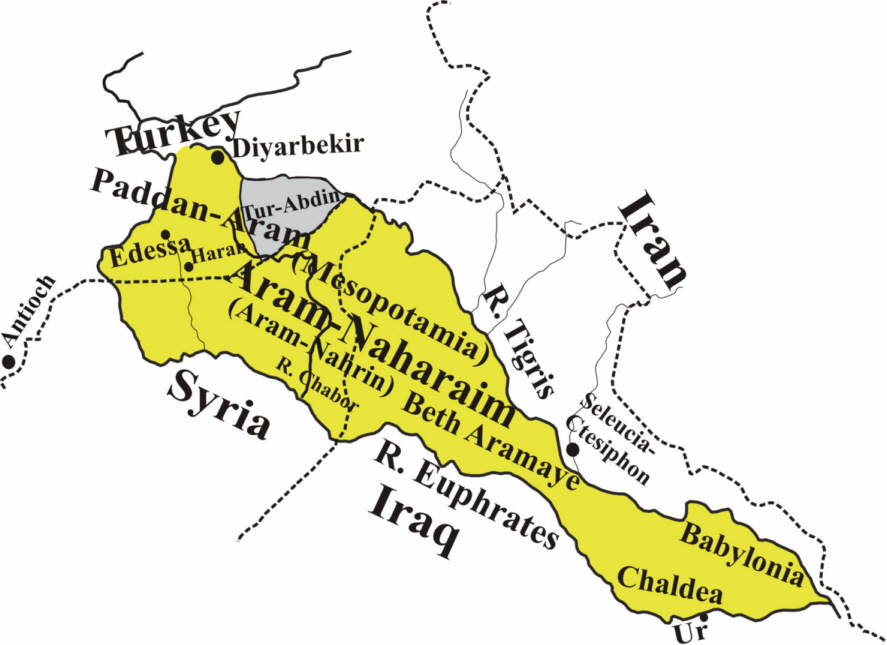
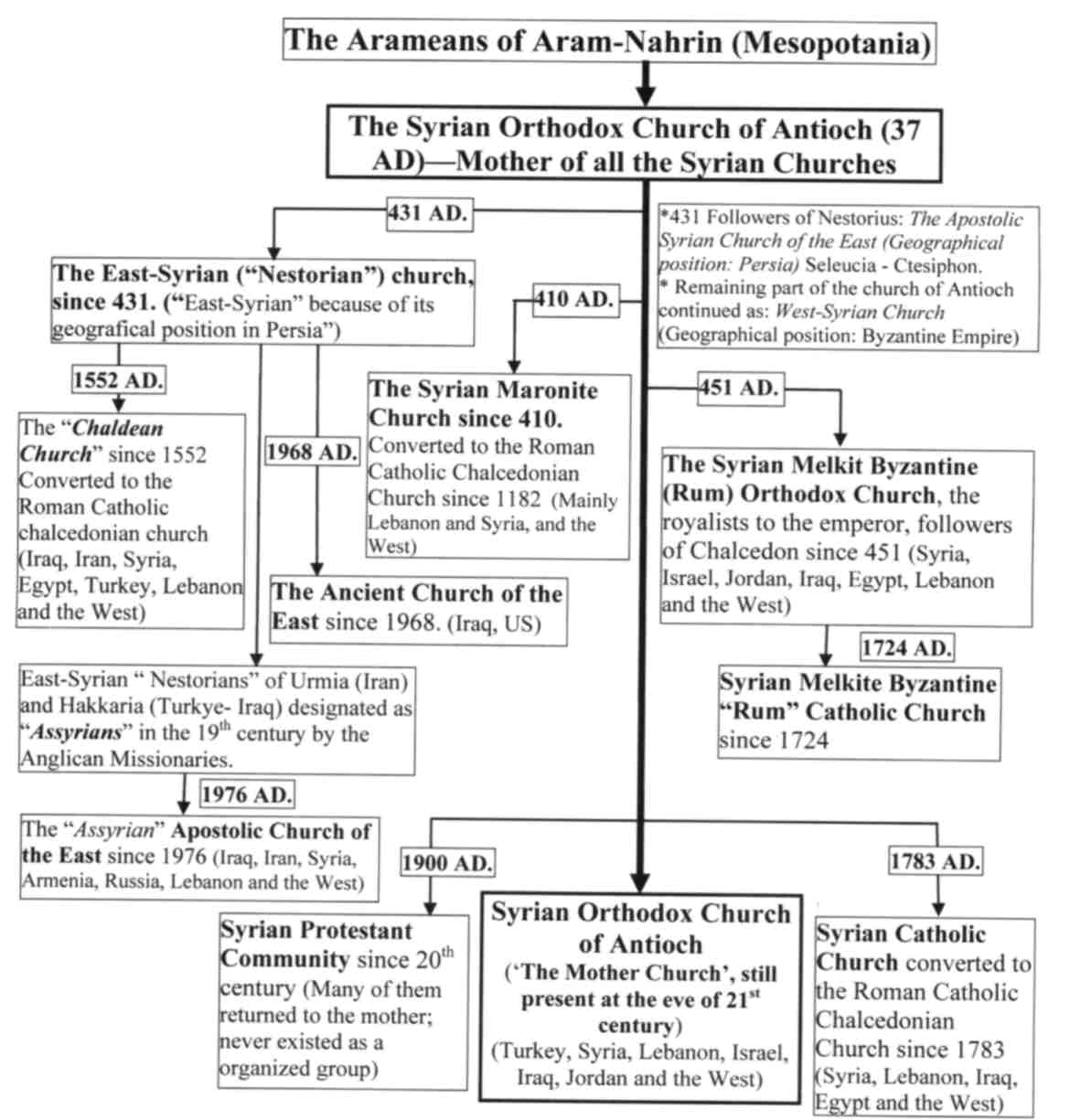
The area where the Aramean people come from was known as “Mesopotamia” and has been divided into the modern countries Iraq, Syria, and Turkey since the 20th century. In the ancient times the cradle of the Aramean forefathers was called Aramnahrin (or: Aram-Nahrin) in Aramaic. In Hebrew it was called Aram-Naharaim which we encounter in the Old Testament. When the Old Testament was translated into Greek, the term Aram-Naharaim was translated into Mesopotamia, which many become familiarized with through reading many educational and historical texts. The northern area of Aram-Naharaim was called Paddan-Aram, meaning the land of Aram where Biblical figures like Abraham and Jacob lived and walked. In Genesis 24:4 Abraham says to his servants, “You must go back to the country where I was born and get a wife for my son Isaac from among my relatives." Abraham says, “….the country where I was born….” meaning the country of his Aramean fathers Paddan-Aram (part of Aram-Naharaim). Roughly speaking, this area is situated in present south-eastern Turkey. A section of Paddan-Aram is now called Tur Abdin in the Aramaic (Syriac) language, which means “the mountains of the servants of the Lord”, due to the overwhelming presence of monasteries and churches. According to the Aramean historical traditions, the area of Paddan-Aram- in particular ‘Tur Abdin’ – is the proto-land of the Aramean nation. From this proto- or indigenous land, in the course of time, the Arameans started to expand all over the near east. Because of overwhelming presence of Arameans in the southern part of Aram-Nahrin, in the era of early Christianity, it was called Beth-Aramaya, meaning (in Aramaic) “the house of the Arameans”. Regarding Beth Aramaya, Yacob Avgin Manna (Jacques-Eugene Manna 1867-1928), Bishop of the East-Aramean Chaldean church wrote, “The people from Babylon and Assur, are Arameans. The countries of Babylon and Assur were always called Beth Aramaye, that means country of the Arameans.” [1] Regarding the proto-land “Tur- Abdin”; the East- Aramean Chaldean metropolitan Aday Sher, born in 1867 in Shaqlawa [Northern Iraq] and became the archbishop of Seert [Turkey]; says,, "The first inhabitants of Tur Abdin are the Arameans, for they inhabited the whole Mountain of Masios... This is also repeated by Patriarch Afrem Barsauwm[2], also called ‘the star of the middle-east’ Aramean people (including “Assyrians” and Chaldeans) and the Christianity After the coming of Jesus Christ, the Arameans (including Assyrians and Chaldeans) of Aram-Naharaim accepted the teachings of Christ and established together with the apostles of Jesus and the converted Jews, the Syrian Church of Antioch, the second Patriarchy after Jerusalem, where for the first time the followers of Jesus Christ were called Christians (Acts 11:26). This church was the mother of all the Churches and the first Church established outside Israel, whose Patriarch currently resides in Damascus, Syria[3]. The Semitic Arameans (‘not to be confused with “Armenians”) underwent a change of name after they had embraced Christianity and were then called “Syrians”[1], in order to be distinguished from the Arameans who were not converted. However, this should not be confused with the present-day Syrian Arabs. In deeper sense, the name "Syrian" belongs to the Aramean people and not to the Arabs invaders. However, after the conquer of Mesopotamia by Arabs, they adapted the name "Syrian"; with the result that the real Syrians, that is to say: Arameans; became strangers in their own indigenous lands. The Arameans were spread throughout middle-east. However, in the very beginning of the Christianity; geographically they were divided into East-Arameans; those living in Persian Empire and West-Arameans; those living in the Roman (Byzantine) Empire. The Church in the Roman Empire: Syrian orthodox church of Antioch; the mother Church; with Antioch as the Ecclesial Jurisdiction. The Church in Persia: The Church of the East or the Church of Persia, Seleucia Ctesiphon and the seat of the Catholicos. However the Arameans in Persia were still under the jurisdiction of Antioch.
[1] Please find here the testimonies of the brilliant historians of the Syrian Church of Antioch concerning synonymy Aramean/Syrian for one and the same people; “Beth- Aramaye” or “Beth- Oromoye”; “Proto- land” Tur Abdin/Paddan- Aram: https://www.aramnahrin.org/English/Testimonies-Aramean-scholars.htm [2] http://www.aramnaharaim.org/ [3] More on the establishment of Syrian Orthodox Church of Antioch: http://www.aramnahrin.org/English/SyrianChurchOfAntioch.htm Iraqi Christians: http://www.iraqichristians.info
Copyright © Aram-Nahrin Organisation
|
Letters to governments and international institutions
Aramean Spiritual/ Physical Genocide
Fake News on the Aramean nation:
1-12-2009: Aramean Organizations sent a letter to the new elected president of the European Union
10-14 August 2009: Aram-Naharaim attends the annual meeting of the UN Expert Mechanism On the Rights of Indigenous Peoples. Statement on the situation of the Aramean people in Syria, Turkey and Iraq
25-4-2008: Aramean Organisations ask for protection of Aramean spiritual leaders in Iraq
22-8-2007: Aram-Nahrin sends a letter to President George Bush, President Nicolas Sarkozy and Prime Minister Gordon Brown
31 July - 4 August 2006: Aram-Naharaim attends the 24th session of the Working Group on the Indigenous Populations
* Aramaic language in danger: Shall the language of Abraham, Moses and Jesus disappear?
* Proposal: Media Ombudsman for Indigenous Peoples.
* Report of Aram-Naharaim: A great success for the Aramean cause …. the Arameans and the UN…..
20-10-2005: Aram-Naharaim in action for the Arameans in Iraq
18-22 July 2005: Aram-Naharaim attends the 23rd session of the Working Group on the Indigenous Populations: A statement on “Spiritual Colonialism and the decline of the Indigenous Aramean people of Aram-Nahrin”
19-23 July 2004: Aram-Naharaim attends the 22nd session of the Working Group on the Indigenous Populations. Statement: The exclusion and discrimination of the Indigenous Aramean people of Mesopotamia (Aram-Naharaim)
|